Raiza: Metroidvania 2D
April 20, 2026
A Metroidvania Inspired by Hollow Knight and Celeste
Raiza is a 2D side-scroller platformer developed by Guilty Geeks using Unity and the Universal Render Pipeline. Inspired by the tight controls of Celeste and the atmospheric exploration of Hollow Knight, Raiza takes players through swampy landscapes filled with dangerous creatures.
Team
Developers
Artist
Alaim Amán Llanes
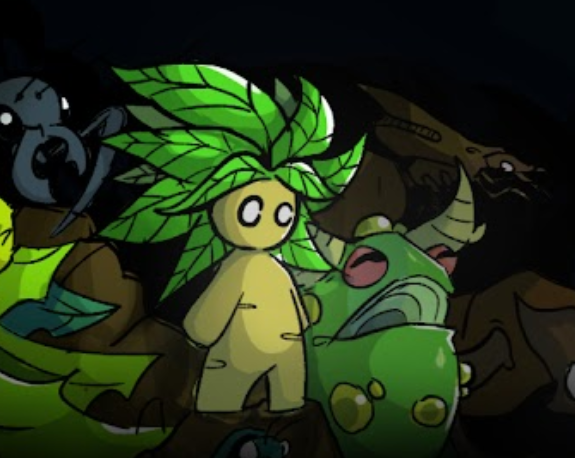
Gameplay
Gameplay Systems
At the core of Raiza is a robust player controller system, fluid animations, and an event-driven architecture:
✓ Player Controller
Complete movement, jumping and interaction system with full animation controller, stats, life system and visual effects.
✓ Fluid Movement & Animations
Carefully crafted movement system that achieves fluid and responsive controls. Combined with hand-tuned animations, the character feels alive and connected to the player's inputs.
✓ Event-Driven Architecture
Codebase built on an event-driven architecture that keeps systems decoupled and maintainable. Communication between components happens through events, reducing dependencies and making the codebase easier to scale.
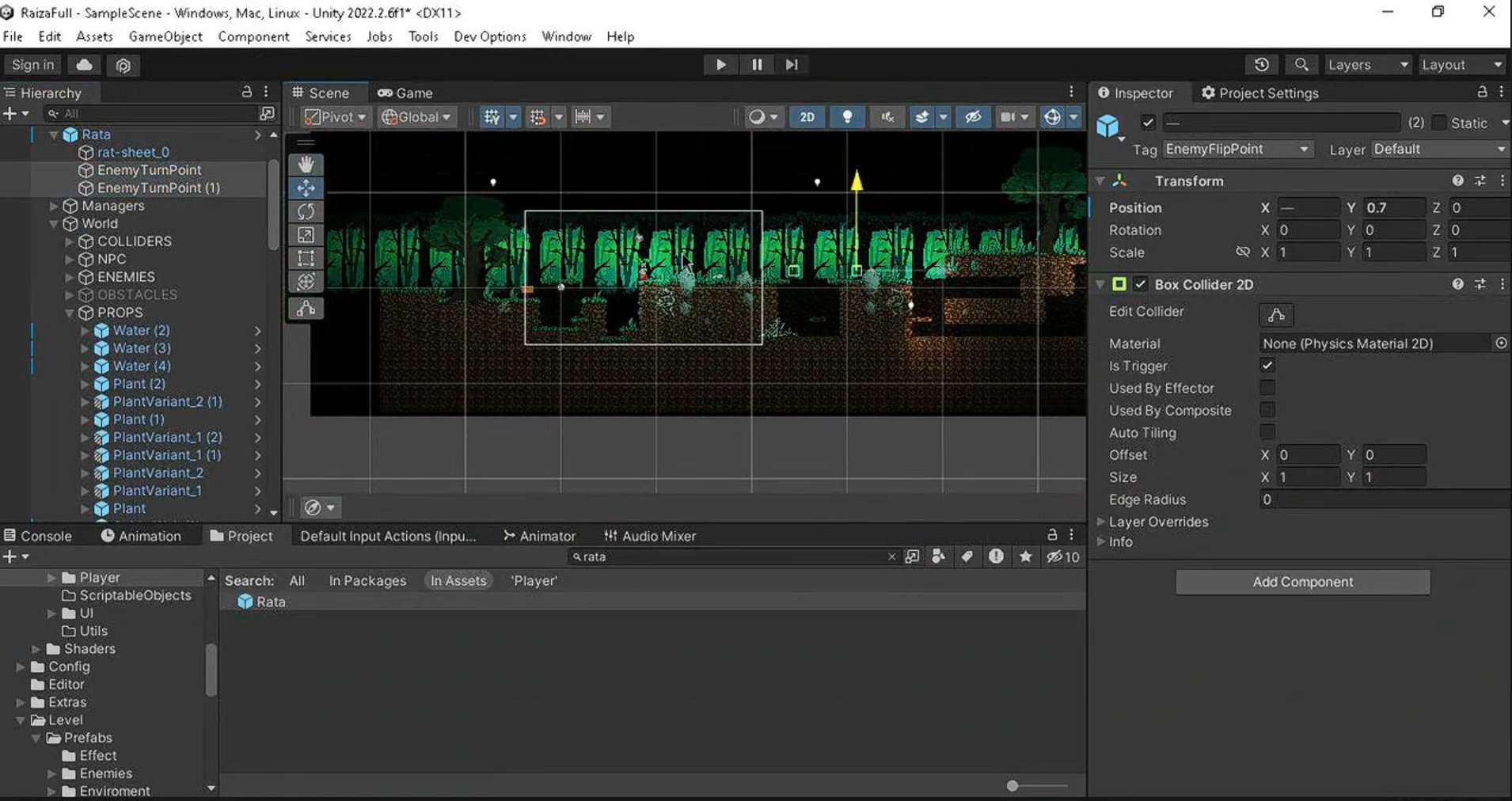
Technical Systems
Under the hood, Raiza uses several optimization and design patterns:
- Parallax Scrolling - Background with depth for immersive environments.
- Object Pooling - Optimized system for reusable objects to prevent performance spikes.
- Dialog System - ScriptableObjects-based dialog controller for narrative moments.
- Checkpoints - Save points throughout levels.
- Cinemachine - Dynamic camera with smooth tracking and effects.
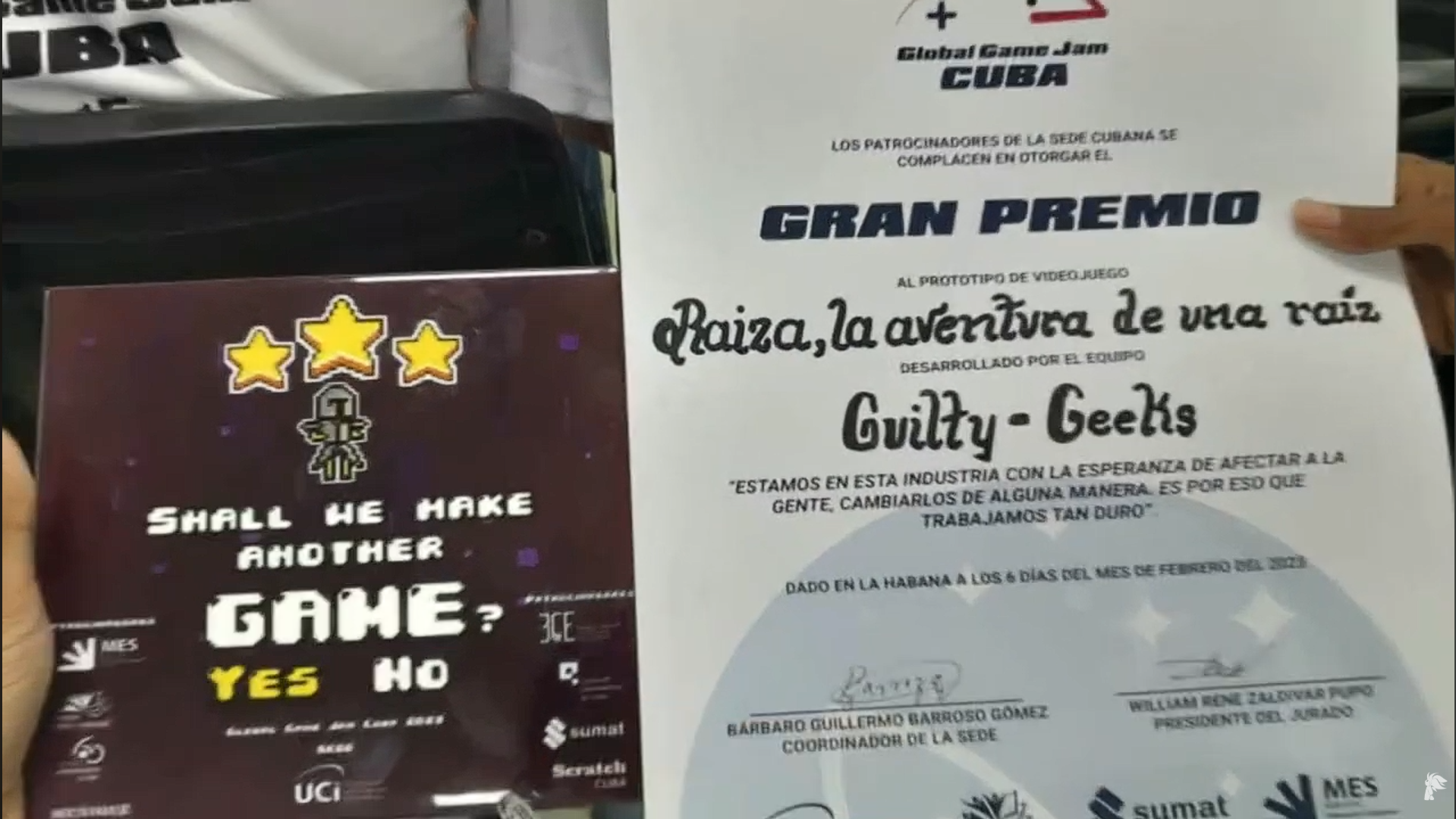
Visual Effects
Custom shaders and effects bring the world to life:
- Custom shockwave shaders
- Charge effects and visual onomatopoeias
- Particles and VFX for combat and environment
- Custom shaders: Shockwave, Shadow Cat Lit, Emission Sprite Lit, Chant
Conclusion
Raiza represents a significant effort in 2D game development, combining polished gameplay mechanics with atmospheric level design. The project showcases advanced Unity techniques including custom shaders, object pooling, and Cinemachine camera work.
Do you have questions about the project? Want to know more about the development process? Write to me!